




BARF power supply
If you dream of offering your faithful companion a healthier diet adapted to his needs, BARF is surely made for you! However, there is a lot of information and divergent opinions on the internet and it becomes difficult to navigate. What are the advantages of such a diet? How to put it into practice? What are its principles? Rest assured, we have found the answers to all your questions. Discover without further delay everything you need to know about BARF food!

What is BARF food?
First of all, the acronym BARF (Biologically Appropriate Raw Food), literally translated, means “Biologically Appropriate Raw Food”. It is a diet based on the idea that our little ones are biologically adapted to a raw and varied diet (meat, fish, offal, bones, vegetables, fruits, etc.) like their ancestors.
It was in the 1990s and thanks to the work of Australian veterinarian Ian Billinghurst, founder of BARF, that this concept saw the light of day. After witnessing the devastating effects of industrial food on animal health, he draws on his observation of the natural diet of wild animals and proposes a similar approach for our everyday companions.
Since then, there have been numerous testimonials from owners who report an improvement in the health and behavior of their animals and the BARF diet continues to gain fans.
What are the basic principles of BARF?
Followers of this approach seek to offer a balanced , nutritious diet that is more adapted to the physiological needs of their companions through natural and unprocessed ingredients. The fundamental principles are therefore as follows:
- a daily ration adapted to each individual: in general, for an adult dog, the recommended daily ration should represent approximately 3% of its ideal weight . For young puppies, up to six weeks, this percentage is around 10 % until finally reaching 5% growth.
- a nutritional balance to respect : unlike traditional feeding methods, BARF meals are balanced over several days, sometimes weeks. It is therefore advisable to vary animal and plant sources when composing menus. Also be sure to respect the recommended quantities of meat, bones, offal, fruits and vegetables to ensure a good balanced diet . A diet consisting solely of raw meat and offal will prove harmful to your dog!
What are the advantages and disadvantages ?
On the other hand, according to Dr. Ian Billinghurst [page in English] and the testimonies of many “barfers” , a well-controlled diet results in considerable advantages :
- reduction or even absence of heart, kidney, pancreatic and hepatic problems
- improvement in coat quality, transit and digestion and sometimes even behavior
- better oral hygiene
- strengthening of the immune system
- reduced chances of developing skin, infectious, degenerative diseases or cancer
- more robust health even among seniors
- increased longevity, appetite and energy
As you will have understood, dogs fed according to the principles of this diet would have iron health at all levels. Enough to make veterinarians pale!
However, the diet is not without risks and the subject continues to divide. Critics mainly raise the risks of bacterial and parasitic infections due to the consumption of raw meats from uncontrolled environments. But also the deficiencies or excesses which can occur if the rations offered are unsuitable for the dog's needs. But these arguments are refuted by followers of this method. They guarantee the beneficial effects of a natural and raw diet . Provided that it complies with nutritional and health recommendations .
The higher cost and organization associated with the BARF diet are also among the disadvantages of this particular diet. It is imperative to take them into account if you decide to take the plunge.
What are its components of the BARF power supply?

Raw meats
Raw meat is the main source of protein and fat in the BARF diet, so it is recommended that it make up 40-50% of your pet's daily ration . Is he more the type to show off? No problem ! To vary the pleasures and contributions, the options are numerous: mutton, lamb, pork, beef, goose, duck, chicken, turkey, fish, rabbit, veal, ostrich, deer... It is also recommended to diversify animal sources at your disposal to guarantee a better balanced diet .
Obviously, the nutritional values vary from one meat to another and it is necessary to take into account the specific needs of your four-legged friend. For example, a dog suffering from obesity will have to eat lean meat (less than 5% fat), such as poultry (with the exception of goose, which has the fattest meat) or a fine piece of steak. On the contrary, an active and healthy dog will be able to enjoy fatty meat (10-20% fat) such as lamb shoulder, pork loin or even beef steak.
Bones
Bones are an essential part of the BARF diet and should make up 30-40% of the daily ration . They provide essential minerals, such as calcium and phosphorus , and chewing contributes to good oral hygiene . It will even give your little one mental stimulation during his meal!
However, choose bones carefully:
- avoid sharp fragments and favor fleshy bones , either completely coated with meat.
- cooked bones should be avoided. They become brittle and could easily injure your dog.
- too large bones can cause problems. Take care to adapt their size to that of your companion. Quail or chicken bones will be more suitable for small people, for example.
- forget the marrow bones . These are very hard, difficult to digest and your little one may even get stuck in them! Additionally, it is rare to find them in the wild.
If you are concerned about the risks, it is possible to grind the bones to prevent the dangers. However, the benefits of chewing will be lost.
Offal
Not only a source of protein , offal offers a wealth of vitamins , minerals and trace elements important for your furball. They must constitute 10% of his daily ration . There are two categories among offal:
- red: more interesting from a nutritional point of view, since they are richer in iron and vitamins. Like the heart, the tongue, the liver, the spleen, the kidneys, or even the lungs…
- white: the strawberry, the intestines, the ears, green belly…
Be sure to alternate sources of offal within menus to ensure a balanced intake of nutrients.
Vegetables and fruits
In nature, wild animals consume the entirety of their prey , which is often herbivorous. This therefore includes the digestive tract and its contents. This is why, in order to reproduce a similar dietary pattern in pets, it is important to incorporate fruits and vegetables into their food. Because, although they are not essential for their survival, they promote digestive transit and are a source of fiber and nutrients . One tablespoon reduced to puree (for 10 kg of the dog's weight) per daily ration will be more than enough.
However, before giving your dog a fruit or vegetable for the first time, it is essential to find out beforehand. Indeed, even if many of them are beneficial for our little ones, like these 3 green vegetables , some are toxic for their health. This is the case for grapes, avocado, onion, to name just a few examples.
Nutritional supplements
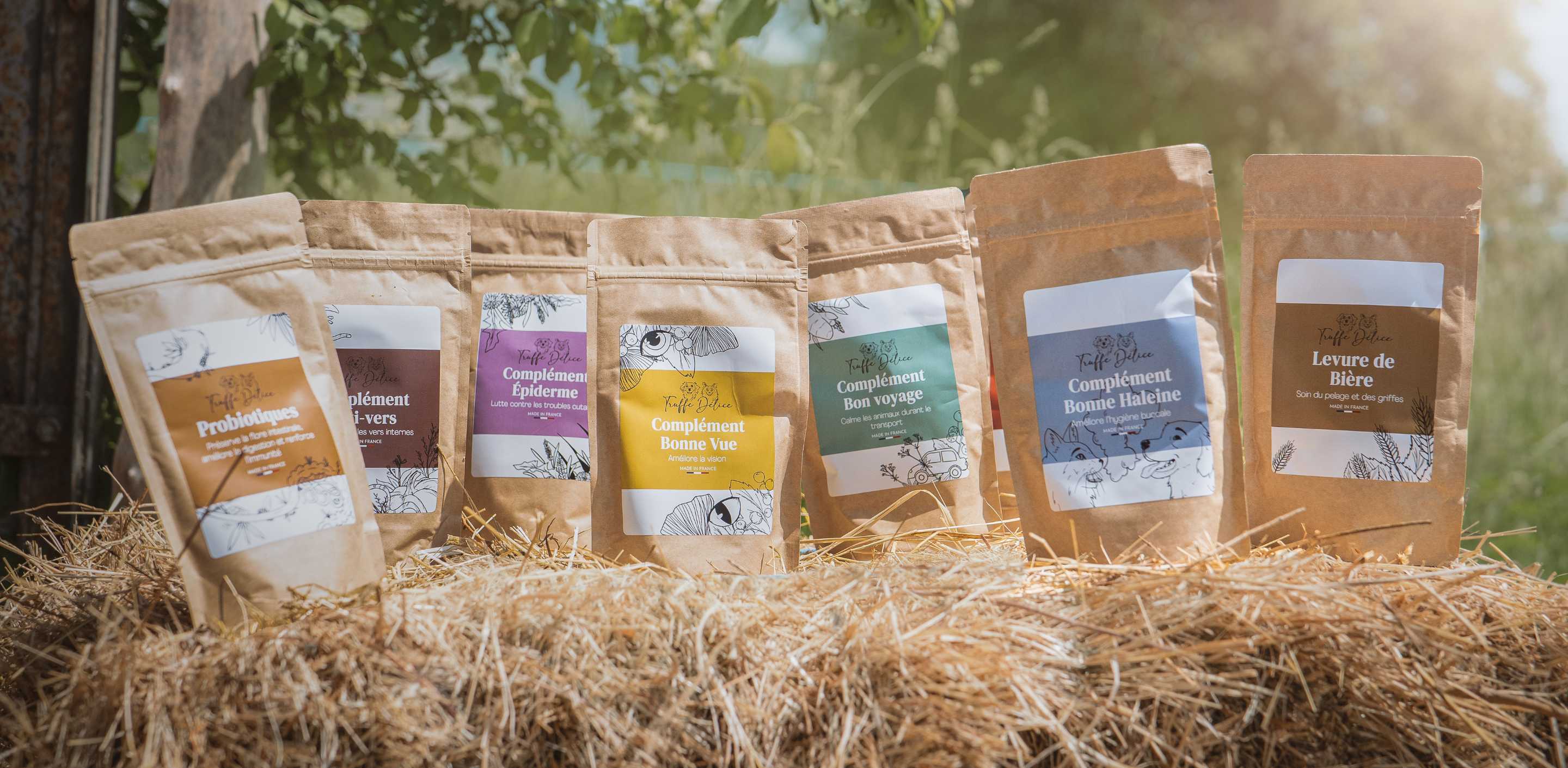
Supplements can be added to the BARF diet to ensure balanced nutrient intake . There are several kinds :
- vegetable oils (rapeseed, borage, hemp, etc.): rich in omegas, vitamins, minerals and trace elements
- fish oils (salmon, sardines, herring): rich in EPA and DHA fatty acids
- plants , herbs and algae (turmeric, alfalfa, spirulina, etc.): anti-inflammatory properties, vitamin, mineral and trace element intake
- brewer's yeast : rich in folic acid, vitamins and trace elements
Note, however, that most of these supplements remain optional for a healthy dog with a varied and balanced diet . You should consult your veterinarian to determine your pet's specific needs and ensure that adding supplements will benefit them.
Eggs
Contrary to popular belief, eggs are good for dogs! They provide excellent quality protein and must be given whole , shell included! Enough to stock up on calcium . They can therefore be an integral part of the menu, but only in reasonable quantities . One chicken egg (per 10 kg of body weight) per week is recommended.
What are the rules to follow?
Food handling and storage
To reduce the risk of bacterial contamination, it is essential that meal preparation takes place in a clean and safe environment . You will need to follow strict hygiene rules : wash your hands before and after each contact with food, handle raw meats separately from other foods and carefully clean your utensils and work surfaces after use.
When it comes to storage, freezing raw meat and fish is an effective method for eliminating parasites . It is recommended to freeze them for at least two weeks before serving them to your dog. Avoid defrosting your meal at room temperature and instead use the refrigerator . This is the safest method to prevent bacterial multiplication .
Precautions to avoid food risks
Eating raw meat means having to be extra vigilant. Make sure of the origin and quality of the products you buy. As for pork consumption , this must be seriously controlled . Because like the wild boar, which is completely excluded , they can carry very resistant parasites, but also Aujeszky's disease. A fatal disease for our little ones.
Obviously, it is crucial to seek advice from your veterinarian before starting a BARF diet. Every animal is unique, and it is important to determine their individual needs . Once the transition is complete, monitor your pet's health carefully. Observe changes in behavior, digestion , or physical appearance . If you notice signs of discomfort, excessive vomiting or unusual health problems, you should consult without delay !
How to transition to a BARF power supply?
A special transition
First, be aware that BARF and kibble do not mix well in your dog's stomach, because these two diets have different digestion times . Indeed, this is not a classic gradual transition. A switch to such a diet upsets the digestive system of dogs accustomed to industrial canine food. It is therefore preferable to start the transition with a 24-hour fast (with the exception of puppies, seniors, pregnant females and sick dogs) in order to empty the digestive system.
Then, for one to two weeks, start with a menu based on chicken OR turkey and pureed carrots , to which you will add a little fish oil . The goal is to get your dog used to this new way of eating.
If he digests correctly and his stools seem satisfactory to you, you can gradually introduce new meats, bones, offal and new fruits and vegetables to his bowl. Proceed gently , you can add a new food at 1/3 of its normal portion, then 2/3, etc. Until you get a full ration. This introductory phase lasts several weeks.
A successful transition will result in:
- improved appetite and physical condition , including better coat and skin health
- normal, well-formed stools of regular color and easy to pass
- increased energy and vitality
Common problems
However, you may have to face some problems. Do not panic ! Most of the time, episodes of diarrhea or constipation are common during a dietary transition. If your little one's general condition is not affected and these episodes only last a few days , there is no need to worry. Otherwise, if you notice the presence of fever or blood in the stools , contact your veterinarian.
What budget should you consider?
Finally, generally speaking, the cost of BARF food is higher than that of industrial food. However, the budget to consider is not the same for everyone. It varies depending on the size , weight , age and state of health of your companion.
It is recommended that you make a realistic estimate of your potential costs . This must notably include the price of the ingredients (different depending on quality, origin and availability), the cost of storage (purchase of a freezer dedicated to your dog for example), and the price of veterinary consultations . They are necessary during the transition , but also to monitor the general health of your dog.
To conclude…
If it is well adapted, the BARF diet stands out as the diet that best meets the needs of our pets. Although more expensive, it proves to be a source of numerous advantages and considerable benefits for their health.
However, it is essential to remember that a raw diet is not without risks and is particularly dependent on the quality of the rations and products offered. Make sure they come from and be sure to follow nutritional and health recommendations. Of course, we strongly encourage you to consult an animal health professional before making any dietary changes to determine the specific needs of your little one!
Don't wait any longer to give your faithful companion the life he deserves. Immediately discover our selection of 100% natural treats for dogs and cats!